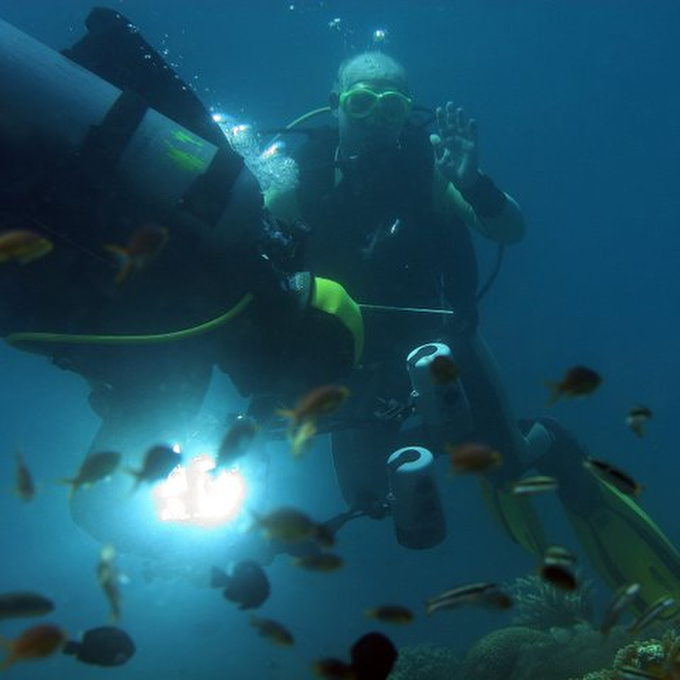

The Hummingfish Foundation helped to plan, organized and implemented Timor-Leste’s first Dive Photo Competition from October 10th to the 14th, 2010. 60 divers from more then 9 countries where in Timor-Leste to take place in the week-long event.
This was the first dive-tourism promotional event by Timor-Leste and as a result, there is a buzz in the diving world about Timor-Leste as the next hot dive-tourism destination.
Asian Diver Magazine, Daia Discovery, Dive Discovery Magazine & Korea’s Underwater World magazine are some of the few regional publications to publish the Dive Photo Competition results
Timor-Leste Dive Photo Contest Makes a Big Splash: Winners of five separate categories won a share in US$30,000 cash and many other prizes.
Event organiser Sean Ferguson-Borrell said of the contest; “This was a unique event featuring 10 dive sites in and around the capital of Timor-Leste, Dili. The photographers were able to capture some amazing shots which will form a national archive for future use by the government of Timor-Leste.”
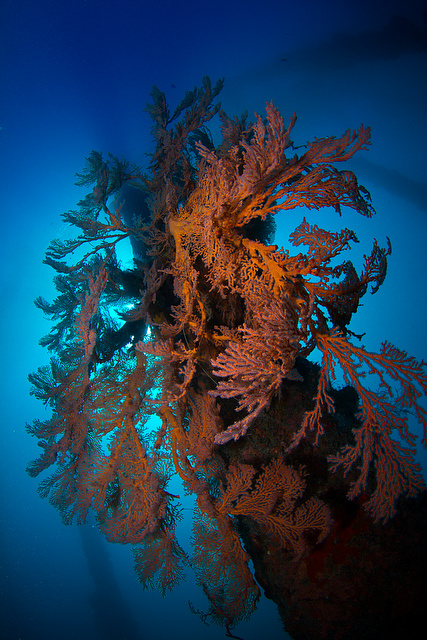
The week-long dive photo competition finished out on Friday 15 October with a presentation at the Palacio Lahane. The contest consisted of four separate categories (clingers, crawlers, swimmers and dwellers) as well as a portfolio category and a series of Presidential Awards for HE President José Ramos-Horta’s selected photographs. All of the prize winning photos are to be placed online at
www.underwatertimorleste.com.
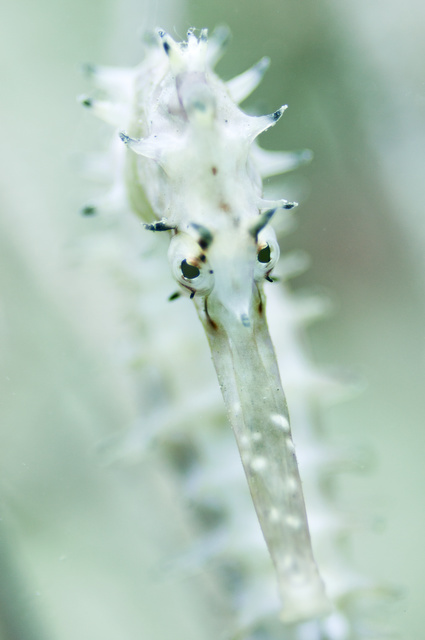
First place was won by Hendra Tan, with an iridescent white seahorse, in the swimmers category. Ronny Rengkung won first place with a photo capturing the intricate concentration of a local Timorese fisherman repairing his fishing net in the dwellers category. Dewi Wilaisono won crawlers for a picture of a shrimp. Im Eun Jae, a Korean, won first place for the clingers with a beige fan coral.
The art category was a late entry into the competition, and allowed the divers to introduce any sort of editing into their photos. Gorgeous compositions abounded in this category but the eventual winner was again Ronny Rengkung with a
ghostly nocturnal photo of a turtle looking up at the shadow of a local swimmer floating on the surface.
Finally the portfolio category allowed for a series of seven photos to be entered together. The winner of this category was Lim Kay Burn. From splendid stonefish, unreal close-ups of miniscule shrimp and a most amazing shot of a local spear-fisherman proudly displaying his catch for the savvy photographer.
The President’s awards:
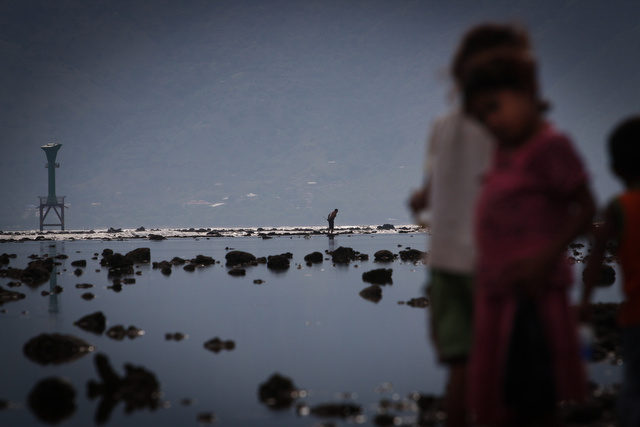
Ina Bradbridge was given the gong for the dwellers category with a shot of low tide shell-fish collectors.
Brian Francisco caught the president’s attention for the cr
awlers category for a multicoloured shrimp amongst effervescent soft coral.
Isaak da Costa Residencao won a presidential medal for his incredible work, which according to Ferguson-Borrell, was instrumental to the events smooth operation.
Finally Dan Groshong, previous editor of Timor-Leste’s first ever coffee table book, was recognised for his tireless work in promotion of the seas of timor-leste.
President Ramos-Horta closed the ceremony thanking the participants. “I hope that this has been a rewarding experience and that we will do even better next time around. I hope you will come again, the photographs that you took, we will look to use in different ways to advertise Timor-Leste.
“Timor-Leste together with five other countries ma
ke up the so-called coral triangle initiative. We are those responsible for an area of the some of the richest life in the world”
“More than 100 million people depend on the coral for their livelihood, we make a commitment to preserve the nature, to preserve the environm
ent, to preserve the habitat of all of these wonderful creatures.
“Thank you all for coming and to my staff, there are so many people, I extend my most sincere appreciation for your hard work and dedication. Enjoy your weekend in Dili. Thank you. God Bless you.”
Developing Diving in Timor-Leste
Many of the divers also spoke about the potential for a growing dive industry here. Eun Jae noted “If you are the right kind of diver, there are still many sites that are undeveloped. If you can develop a site it will be great”
Stephanie, a support diver in the competition living in Hong Kong said “I think the marine life needs to be further explored”. Gil, an Englishman by birth but based in Borneo with Scubazoo, an underwater photo and production crew was also very excited for the future of diving in Timor-Leste. “We’ve only dived a very small selection of Timor-Leste itself, and what we’ve seen is amazing, everything you could look for.” He continued to say that “There are bound to be other sites where dive operators haven’t reached yet that will be even more interesting.”
Gil also noted that “All has been very accessible, within a couple of hours of Dili itself. What else lies out there is the unknown, very exciting”. What’s more, “the migratory route just near Dili has a great many whales passing by. We hope to get out and dive with them, though whether we can photograph them will be another story – they cruise past pretty quickly”.
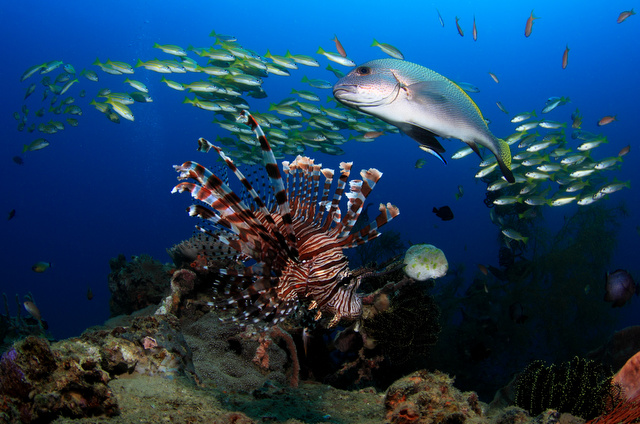
The organiser of the event was keen to point out that “with interest comes risk, Timor-Leste is in an incredible position to show the region and the world that it has something untouched, unexplored and unbelievable – it will be up to the government that this natural resource is protected.”.
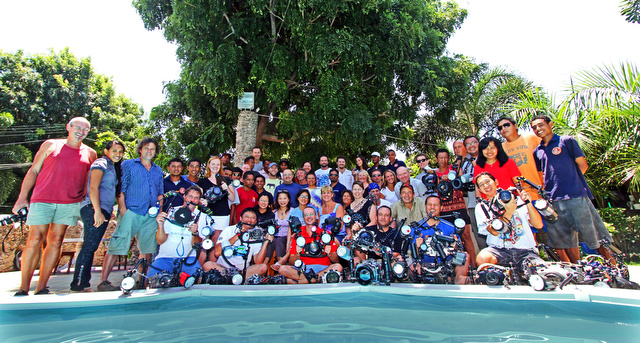
“The initial event was an overwhelming success, we had 33 photographers representing nine nations”. He noted that divers had told that “other places have similar diversity, but here you only need to go 5-10m down, and only 25 off the shore”. He told me “what amazed most of the photographers was that within 10 minutes of the capital (Dili), there was a world class muck dive”.
Award winners
1st Prize Clingers Im Eun Jae
2nd Prize Clingers Kandis Semidang
3rd Prize Clingers Peter Teagle
1st Prize Crawlers Dewi Wilaisono
2nd Prize Crawlers Gil Woolley
3rd Prize Crawlers Ricky Rusli
1st Prize ART Ronny Rengkung
2nd Prize ART Ivan Choong
3rd Prize ART Ricky Rusli
1st Prize Dwellers Ronny Rengkung
2nd Prize Dwellers Ricky Rusli
3d Prize Dwellers Louisa Butler
1st Prize Swimmers Hendra Tan
2nd Prize Swimmers Dewi Wilaisono
3rd Prize Swimmers Kandis Semidang
1st Prize Portfolio Lim Kay Burn
2nd Prize Portfolio Gil Woolley
3rd Prize Portfolio Dave Baxter
President’s choice:
Swimmers Kandis Semidang
Dwellers Ina Varella Bradridege
Clingers Kandis Semidang
Crawlers Brian Francisco
Portfolio Kandis Semidang